Proposed Legislation

If elected, I will vote on thousands of bills. But it also the job of your representative to craft meaningful legislation. Below are three major pieces I would want to advance related to education, the environment, and housing.

These are by no means the only pieces of legislation I would want to advance. If elected, I will be proactive in seeking input on legislation, and if you have any questions or ideas in the meantime, I would love to hear from you!

Person holding money

Switch to a Progressive Tax Structure

The Utah Constitution requires that revenue from income tax be used only for public education, higher education, and services for children and individuals with disabilities. Nearly every session, the legislature goes out of its way to make a nominal income tax cut. These cuts are too small to make a difference for working-class taxpayers, but they represent enormous losses for education and services for individuals with disabilities.

In 2017, the income tax rate was 5%. In 2026, the flat tax rate will be 4.45%. If those tax cuts had not occurred, education and disability services would have received about $600 million more in 2024 alone, and roughly $600 million more every year going forward. These cuts have deprived some of our most important public programs of billions of dollars.

It is no secret that Utah is at the bottom in per-pupil spending in the United States. Despite this, our educators have been able to work miracles and have helped Utah maintain relatively strong graduation rates despite limited funding. If we fund education adequately, I believe we could lead the country in literacy and graduation rates. 

We often make the mistake of thinking that the best companies will go where there are the lowest taxes and the cheapest labor. While those factors are important, the biggest driver is whether companies can recruit a highly educated and skilled workforce.

Additionally, research indicates that increases in per-pupil education spending are associated with higher adult earnings, which in turn expands the tax base. This relationship is stronger for students living in poverty.

Educational spending leads to better social outcomes that we all enjoy. This is especially true when there is investment in early childhood interventions and Cognitive Behavioral Therapy. In one randomized field experiment studying high-risk youth, Cognitive Behavioral Therapy programs reduced violent crime arrests by about 8%. Essentially, it costs about $12,300 to prevent one violent crime.

Preventing even a single violent crime avoids enormous public costs. A single violent offense can cost the public more than $200,000 in incarceration, roughly $32,000 in lost tax revenue while the individual is incarcerated, and an estimated $100,000 in investigation and court costs.

So how do we find the money to make a meaningful new investment in education and services for individuals with disabilities? We do what most states already do: adopt a progressive tax structure.

 
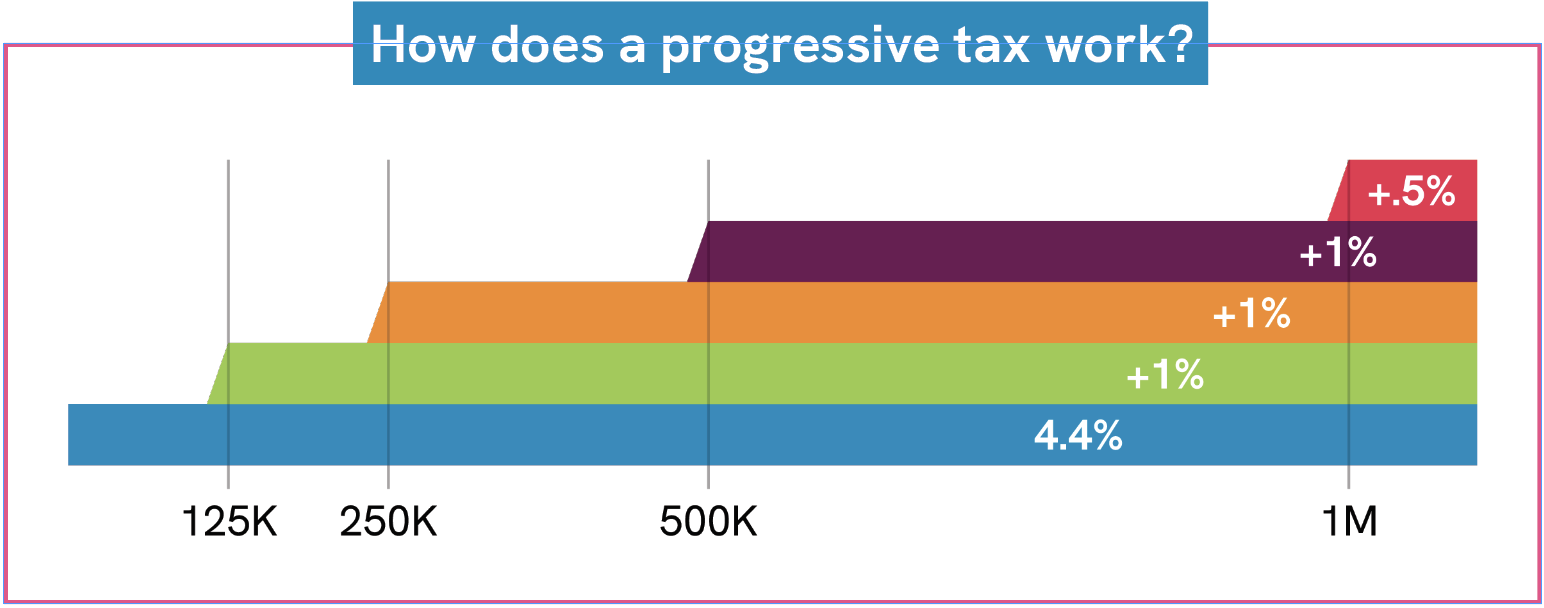
Image of a graph showing tax rates going up as there is more money
 

Currently, every dollar of taxable income in Utah is taxed at a flat rate of 4.45%. A progressive tax would add an additional percentage for portions of income above certain thresholds.

Below are three rate examples showing options for a tiered tax. In the preferred rate, a modest progressive tax structure could generate over $1 billion per year for education and disability services.

Income Amount Preferred Rate Middle Rate Low Rate
Under 90K 4.4% 4.85% 4.4%
90–125K 4.4% 4.85% 4.5%
125–250K 5.4% 4.85% 5.0%
250–500K 6.4% 4.85% 5.5%
500K–1M 7.4% 5.85% 6.0%
1M+ 7.9% 6.85% 6.5%
Additional $ Raised $1.027B $735M $563M
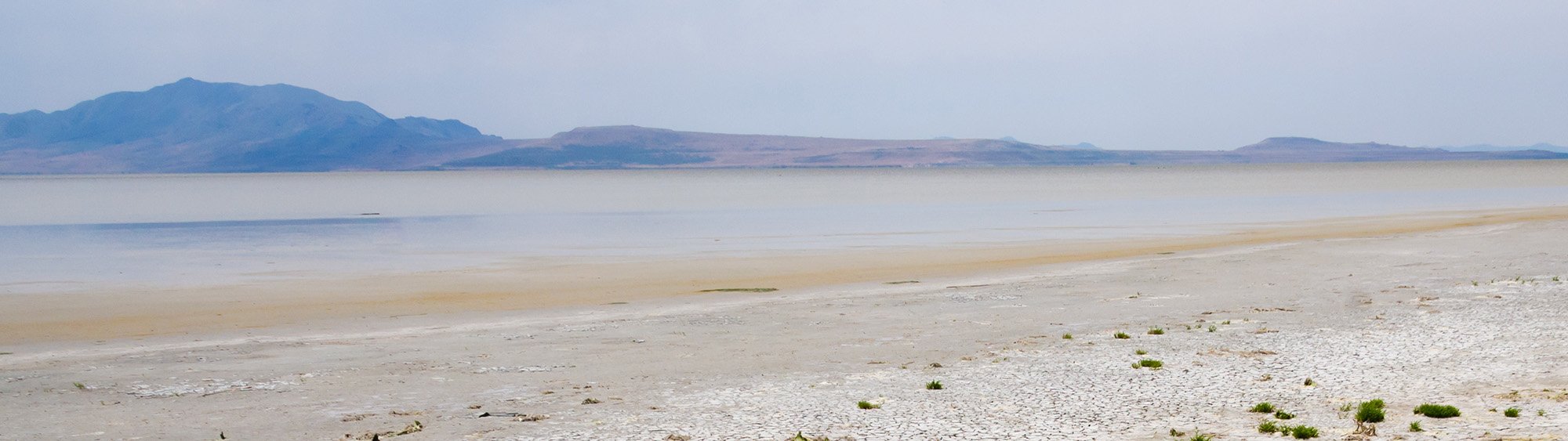
The Great Salt Lake with dry lakebed exposed

Restore the Great Salt Lake

The Current Condition of the Lake

The Great Salt Lake is in crisis. As water levels fall, toxic minerals like arsenic and lead from the lakebed’s soil will end up in our air. This will impact communities adjacent to the lake the most, including our own. It is vital that we address the Great Salt Lake now. 

Within the Great Salt Lake’s watershed, consumption has led to a dramatic decrease in water reaching the lake. While most of this comes from agricultural use (63%), water use in cities makes up a smaller but notable amount (11%). 

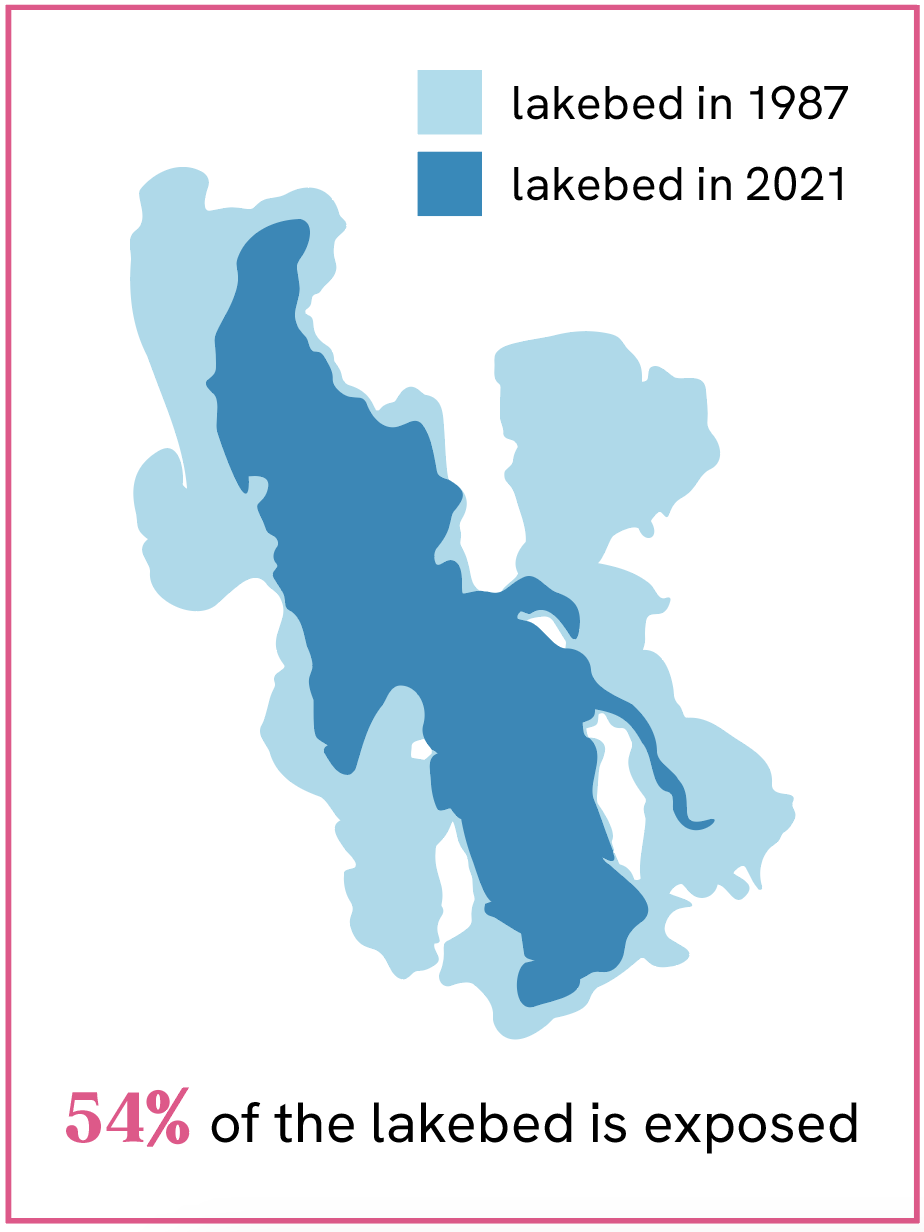
Image of the Great Salt Lake in the 80s and currently, showing how much has dried up

Utah uses the second-highest amount of water per capita in the U.S., and more than 250% more on average than people in similar climates. Utah’s residential water use averages 168 gallons per person per day, with Salt Lake City at 240 gallons. This is significantly higher than Tucson, Arizona, which uses 120 gallons.

In addition to reducing water consumption, we must be aware of the effects of climate change and the Great Basin’s aridification. It is estimated that 9% of the lake’s water loss is due to climate change.

To return the lake to the low end of the healthy water elevation in 30 years, we will need to return between around 500,000 to 1,000,000 acre-feet annually. This will be a defining challenge for our state. It costs significantly more to restore a terminal lake than to preserve it.


How We Can Address the Crisis

It is clear that the current state of the Great Salt Lake is alarming to state lawmakers. Utah’s strategic plan indicates that approximately 355,000 additional acre-feet of water per year must reach the lake to prevent further decline.

During the 2025 legislative session, several bills were passed to address the crisis. While they improve management, wetlands, and administrative capacity, none of them directly increase the amount of water flowing into the lake. Until we begin returning water to the lake itself, we are not solving the problem.

The quickest way to get water into the lake is by leasing water shares. According to the 2023 Great Salt Lake Policy Assessment, the estimated cost would likely range between $150 and $300 per acre-foot. If the state leased enough water to supply the needed inflow, the estimated cost would likely range between $50 million and $100 million per year.

Additional legislation may also be needed to ensure that leased water rights physically reach the lake rather than being diverted, reused, or consumed downstream. Allocating approximately $100 million per year specifically for the leasing of water shares would be a reasonable and immediate step to stabilize the lake.

How to pay for it is the next logical question. Potential funding sources could include dedicated appropriations, targeted water-use fees, federal grants, or other conservation funding streams. Policymakers could become so focused on identifying the perfect funding mechanism that they delay taking decisive action, but the costs of inaction — toxic dust storms, ecological collapse, serious public health risks, and declining property values — far outweigh concerns about which funding mechanism to use.

We cannot be paralyzed seeking the perfect funding source. Waiting will only make the solution more expensive and more difficult. With a rainy day fund of more than $1.5 billion, Utah has the capacity and obligation to begin restoring the Great Salt Lake immediately.

Two people signing a contract

Enact Tenant Opportunity to Purchase Legislation

Housing is a fundamental part of a stable society. When housing is scarce or severely unaffordable — as it is today — the burden falls most heavily on vulnerable populations and working families.

Many affordable housing programs benefit developers and management companies far more than tenants. As someone who has lived in affordable housing, I can attest that eligibility requirements are often unnecessarily cumbersome, leaving many residents caught in the middle: too wealthy to qualify for assistance but too poor to obtain housing without it.

Even when renters secure affordable housing, they often face layers of application, screening, utility, and administrative fees that raise the question of whether the housing is truly affordable.

While strengthening renters’ rights is important, helping renters become owners is transformative. Cooperative housing is the best way to do this at scale.

Cooperative housing allows residents to collectively own the building where they live. Instead of paying rent to a landlord, residents are the sole shareholders in the cooperative that owns their entire complex. Housing payments go toward the mortgage, maintenance, and long-term upkeep rather than generating profit for an outside owner.

Cooperatives can be structured in different ways depending on their goals. Some models prioritize keeping housing permanently affordable, while others allow residents to build equity or benefit from market appreciation. One of the most appealing aspects of cooperative housing is the element of self-determination. Mortgages for cooperative housing have been eligible for federal insurance through HUD for more than 50 years.

At the state level, we could promote cooperative housing through Tenant Opportunity to Purchase (TOP) legislation. This legislation gives renters and cooperatives the first right of refusal when landlords sell the properties they live in. By forming a cooperative, renters can organize, negotiate, and bid on the property themselves. Since being implemented in Washington, D.C., in 1980, the program has been credited with preserving 16,224 affordable housing units

The plan below is modeled off of the one in our nation’s capital, with small buildings being those with 2–4 units and large buildings being those with 5 or more units.


Step 1: Offer of Sale
When planning to sell a building, the owner will be required to provide an offer of sale to the tenants. If they make a contract with a third party to purchase, the owner would be required to provide tenants with a copy of the contract within 7 days.

After an Offer of Sale is provided to the tenants, they can request additional information including the building’s floor plan, operating expenses, utility rates, capital expenditures, current unit and lease details, and list of vacant units. The owner would be required to provide this information within 7 days of the request.

Step 2: Statement of Interest and Cooperative Formation
If the tenants are interested in purchasing the property, they must provide a statement of interest to the owner. This timeline would vary based on the number of units in the property.

For small buildings, the tenants would have 15 days to submit this statement if they wish to collectively purchase the property. If this does not happen, individual tenants would have 7 additional days to submit a statement to purchase the building for themself.

For large buildings, tenants would be required to form a cooperative organization. If they have not already formed a cooperative, they would have 45 days to do so and submit a Statement of Interest. If they have already formed the co-op, they would have 30 days to submit a Statement of Interest.

Step 3: Negotiation and First Right of Refusal 
After sending a statement of interest, tenant organizations or individuals would negotiate the sale with the landlord. If a third party is involved, TOP legislation would grant tenants the first right of refusal, which is the opportunity to match the terms offered to a third party.

For small buildings, the tenants would have a minimum of 90 days to negotiate the contract, with an additional 15 days added if a third-party contract is involved. If a collective tenant organization fails to make a contract, an additional 30 days of negotiation would be provided to individual tenants who provided a statement of interest.

For large buildings, the tenants would have a minimum of 120 days to negotiate the contract, with an additional 15 days added if a third-party contract is involved.

Step 4: Opportunity to Secure Funding
If the owner is selling to tenants, they will be provided a timeline guaranteed by statute to secure funding. For small buildings, they will be granted a minimum of 90 days to secure funding. If a lending institution provides notice in writing that they will need more time to make their decision, this period will be extended to 120 days. For large buildings, tenants will be granted a minimum of 120 days to secure financing, which can be extended to 240 days with written notice from a lending institution.

Step 5: Reset Period
If the owner has not entered into a sales contract within a specified time, the TOP process will reset with a new Offer of Sale. For small buildings, this will happen 240 days after the original Offer of Sale. For large buildings, this will happen 360 days after the original Offer of Sale.